Hiring Is Hard. Health Benefits Can Help You Win (and Keep) Good People.
Nathan Beck, President · November 9, 2026
You finally find the right person for the job. The interview goes well. Then they take an offer from a bigger company down the road.
Often the difference isn't the paycheck. It's the benefits package, and health insurance is usually at the top of the list.
For small businesses, offering group health coverage can feel out of reach. But when you look at what turnover really costs, a well-built plan can be one of the most practical hiring and retention tools you have.
What job seekers are looking for
Health insurance is the benefit workers say they value most. In Indeed's 2025 survey of the U.S. labor force, 63% picked health insurance as a benefit they care about, tied with paid vacation at the top of the list. And 49% of employed job seekers said better benefits were a reason they were looking, second only to higher pay. (Indeed Hiring Lab, Dec. 2025)
Coverage is also expensive for workers to buy on their own. According to KFF's 2026 Employer Health Benefits Survey, family coverage through an employer now averages $28,303 a year. Employees pay about $7,471 of that on average, and the employer covers the rest. (KFF, Oct. 2026)
That employer share is real money in a candidate's pocket. When two offers look similar on salary, the one with solid health benefits often wins.
The hidden cost of turnover
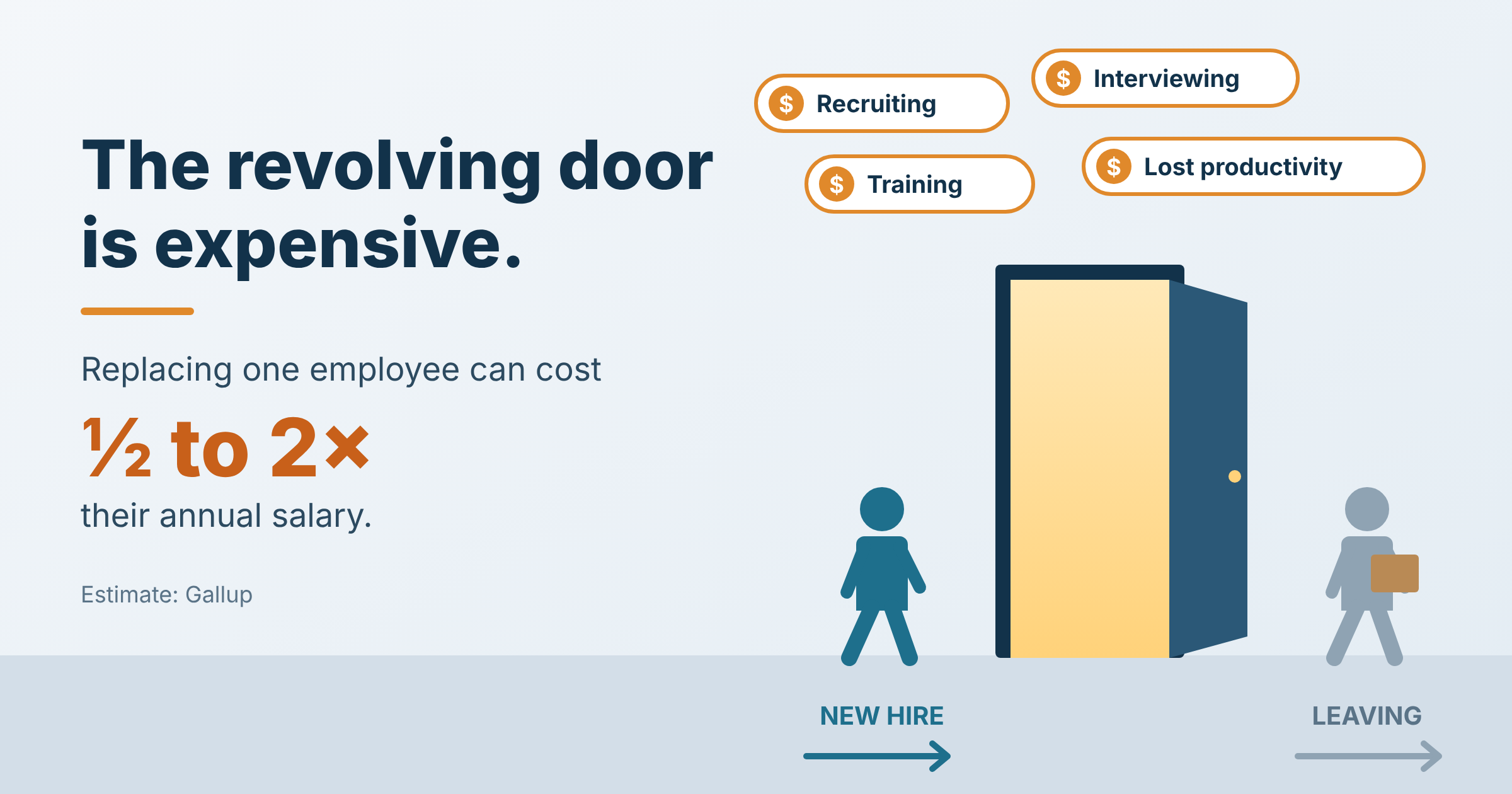
When someone leaves, the cost goes well beyond posting a job ad. There's the time spent interviewing, training a replacement, covering the open seat, and the work that slips in the meantime. Gallup estimates that replacing an employee can cost one-half to two times that person's annual salary. (Gallup)
For a small team, losing even one experienced person can hurt. Benefits that make people want to stay are often less expensive than repeatedly hiring and training their replacements.
Building a plan that fits your budget
A group health plan doesn't have to be all or nothing. Small employers often have more room to shape a plan than they expect:
- How much you contribute. Many employers pay a set percentage or dollar amount toward employee coverage and let employees pay more for richer plans or family coverage.
- Plan design. Deductibles, copays and networks all affect cost. A plan with a higher deductible paired with a health savings account (HSA) can lower premiums for everyone.
- Plan choices. Some employers offer two or three plan options so employees can choose what fits their family and budget.
- Eligibility and waiting periods. You decide who's eligible (for example, full-time employees) and how soon new hires can join, within federal limits.
Carriers also have their own requirements, such as a minimum share of eligible employees who enroll and a minimum employer contribution. Knowing those up front avoids surprises when you shop.
Make the benefit visible
Employees often don't realize how much their employer spends on their coverage. A benefit people don't notice won't help you recruit or retain them.
- Put it in the job posting. "Employer-paid health insurance" is a strong line in a crowded job market.
- Show the dollars. A simple total compensation statement shows employees what you pay toward their coverage each year, on top of their wages.
- Talk about it at review time. When pay comes up, the full picture includes benefits.
Questions to ask before you shop
- How many employees are likely to enroll, and how many have coverage elsewhere (for example, through a spouse)?
- What can the business budget per employee per month?
- Do you want to help with family coverage, or employee-only?
- Which matters more to your team: lower premiums, lower deductibles, or a broad doctor network?
- How quickly should new hires be eligible?
Having rough answers to these makes the conversation about options faster and more useful.
Let's talk about your options
Good people have choices. Health benefits can help make your business the one they choose, and the one they stay with.
This article is for general information only and isn't legal, tax or benefits advice. Plan options, carrier requirements and costs vary.
Sources
- Indeed Hiring Lab: "Classic" Employer Benefits Are a Strong Draw for US Job Seekers (Dec. 4, 2025)
- KFF: 2026 Employer Health Benefits Survey release (Oct. 22, 2026)
- Gallup: This Fixable Problem Costs U.S. Businesses $1 Trillion
For group health questions, contact our team at (405) 301-8150 and we'll connect you with our sister company, Brazos Marketplace.
Have questions about your coverage?
Our advisors will review your risks and build a strategy that fits.
Sherlock Insurance, LLC · Texas License No. 2672234 · Oklahoma License No. 10012010 · NPN 15751042