
The Microsoft Outage Raised an Important Question: What Does Cyber Liability Insurance Cover?
Nathan Beck, President · November 17, 2026
The scenario in this article is a hypothetical example created for illustration. It does not describe an actual client or claim.
When Microsoft experienced a widespread outage on Thursday, November 12, 2026, businesses across the country were affected. Email, communication tools, and other online services became unavailab
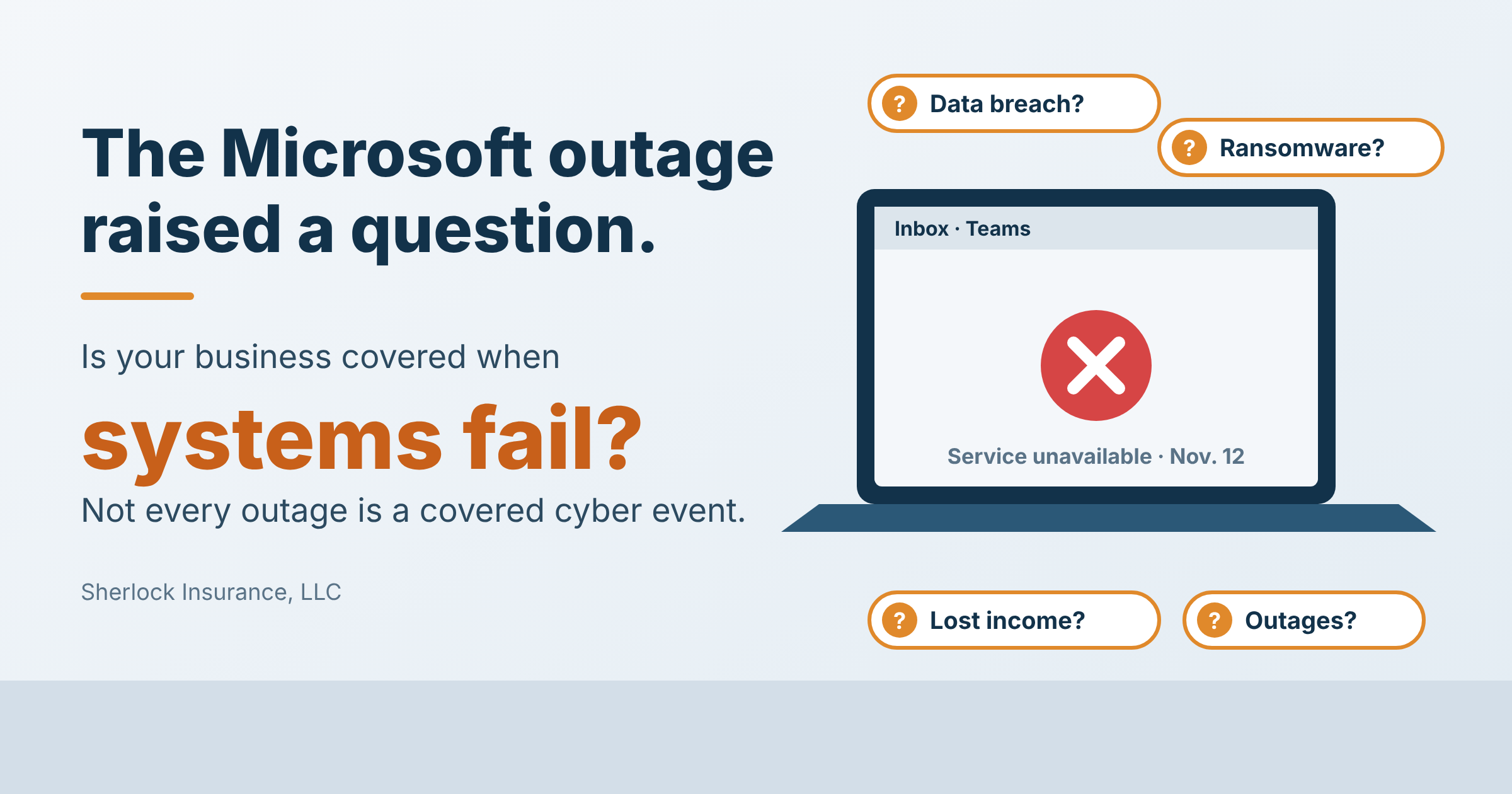
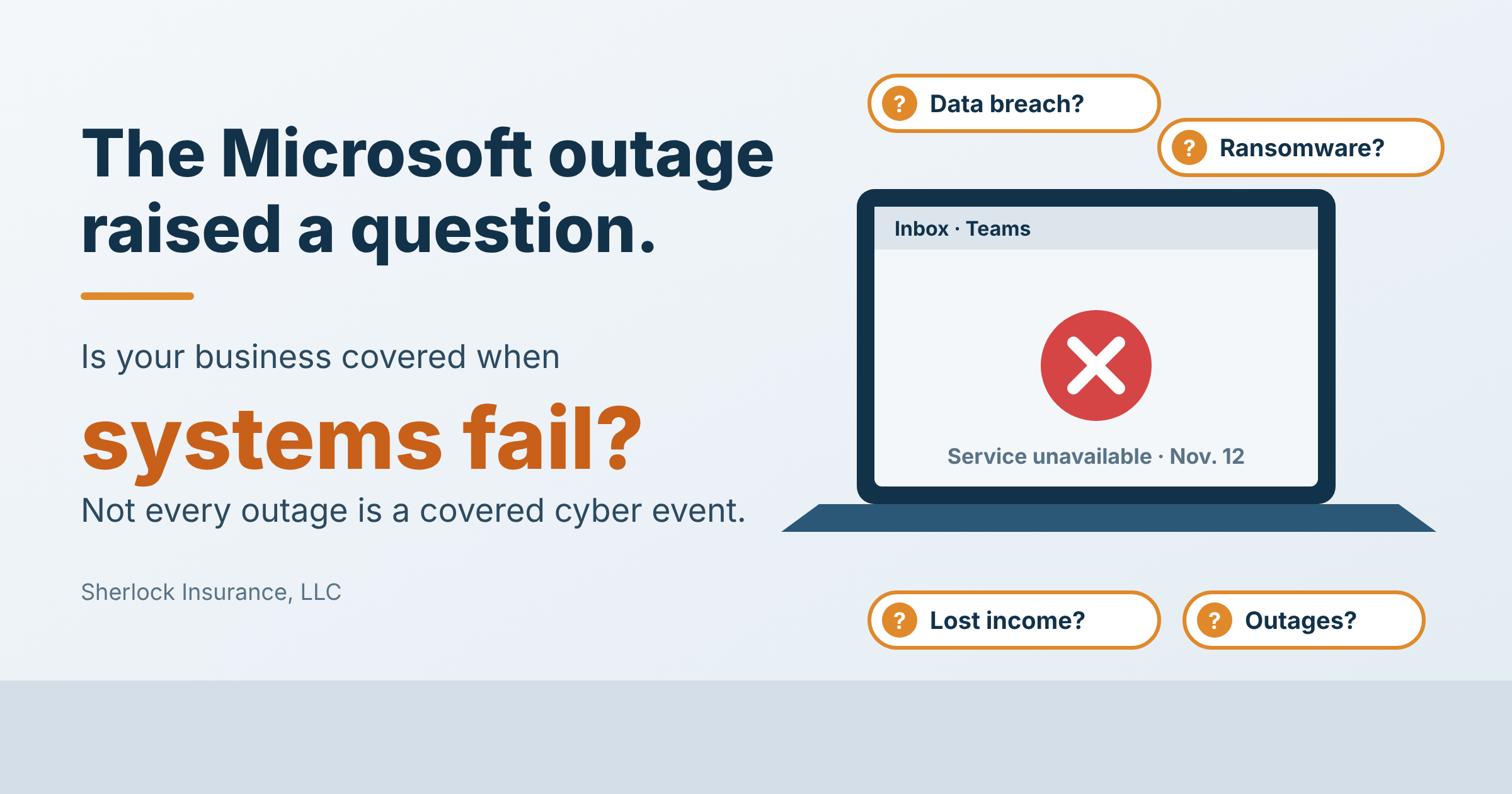
Microsoft attributed the disruption to technical issues, not a cyberattack. But the outage raised an important question: If your business loses access to critical systems, would your insurance help?
The answer depends on what caused the interruption and the coverage included in your policy.
Let's explain.
What Is Cyber Liability Insurance?
Here's a simple way to think about it:
General liability insurance typically helps protect your business against certain third-party bodily injury and property damage claims.
Cyber liability insurance may help protect your business from covered financial losses involving cyberattacks, data breaches, ransomware, and certain technology-related incidents.
Cyber policies vary, but coverage generally falls into two categories.
1. Coverage for Your Business's Own Losses
Often called first-party coverage, this may help pay certain expenses your business incurs following a covered cyber incident.
Depending on the policy, coverage may include:
- Data breach response: Costs for forensic investigations, legal assistance, customer notifications, and credit monitoring.
- Data recovery: Expenses associated with restoring data damaged, lost, or compromised during a covered incident.
- Ransomware and cyber extortion: Certain investigation, recovery, and extortion-related expenses, subject to policy conditions and applicable law.
- Business interruption: Certain lost income and additional expenses when a covered cyber event disrupts business operations. Waiting periods and coverage limits may apply.
- Funds transfer fraud: Certain financial losses involving fraudulent payment instructions, when this coverage is included. Separate limits and conditions often apply.
Not every cyber policy automatically includes all these protections.
2. Coverage for Claims Against Your Business
Often called third-party coverage, this may help when customers or others claim your business is responsible for a covered cybersecurity or privacy incident.
Depending on your policy, coverage may include:
- Privacy liability: Certain claims involving unauthorized access to or disclosure of protected information.
- Legal defense: Defense costs associated with covered lawsuits alleging cybersecurity or privacy failures.
- Regulatory proceedings: Certain investigation and defense expenses, and potentially penalties where legally insurable and covered by the policy.
- Network security liability: Certain claims involving a security failure that affects someone else's data or computer systems.
Coverage depends on the policy's terms, conditions, limits, and exclusions.
What About Outages Like Microsoft's?
This is an important distinction.
Not every technology outage is a covered cyber event.
The November 12 Microsoft outage was attributed to technical problems rather than malicious cyber activity.
Traditional cyber business interruption coverage often requires a specific covered cyber incident, such as a qualifying network security failure or cyberattack.
Some policies may also provide coverage for certain interruptions involving third-party technology providers, sometimes called dependent or contingent business interruption coverage.
However, the availability of that protection varies. Some policies cover only specified incidents, while others may include certain qualifying system failures.
That's why it's important to understand exactly what your policy covers before an interruption happens.
What Doesn't Cyber Insurance Typically Cover?
Cyber insurance is not designed to cover every technology problem or financial loss.
Depending on the policy, exclusions or limitations may apply to:
- Physical damage to computers or other equipment.
- Routine maintenance or ordinary system failures.
- Technology outages that do not meet the policy's coverage requirements.
- Financial losses outside the scope of covered incidents.
- Incidents excluded by specific policy provisions.
Physical equipment damage is often addressed through other types of insurance, although some cyber policies offer specialized protection.
Does Your Business Need Cyber Liability Insurance?
If your business stores customer information, processes electronic payments, sends invoices by email, or depends on online systems, cyber liability insurance is worth discussing.
Even a temporary interruption can create challenges. And a cybersecurity incident may involve expenses beyond simply restoring access to your systems.
The important question isn't just whether you have cyber insurance.
It's whether your coverage addresses the risks your business actually faces.
This article is intended for general educational purposes only and does not constitute an offer or guarantee of insurance coverage. Coverage availability, terms, conditions, limits, deductibles, waiting periods, and exclusions vary by insurer and policy. Cyber liability policies do not necessarily cover technology outages, including outages caused by third-party service providers or events unrelated to malicious cyber activity. All claims are subject to the actual policy language and circumstances of the loss. Contact a licensed insurance professional to discuss your specific insurance needs.
Sherlock Insurance, LLC TX License No. 2672234 · OK License No. 10012010 · NPN 15751042
Questions about your coverage? Call our team at (405) 301-8150 or contact us at sherlockgroup.com/contact.
Have questions about your coverage?
Our advisors will review your risks and build a strategy that fits.
Sherlock Insurance, LLC · Texas License No. 2672234 · Oklahoma License No. 10012010 · NPN 15751042